
The Phenomenal Chocolate Box. How we experience the Unseen
What makes something phenomenal? Gods, earthquakes, The Matrix, and Taylor Swift. A trip to the marvels that co-direct our perceptions, beliefs, and fears.
DESTINOSOPHY
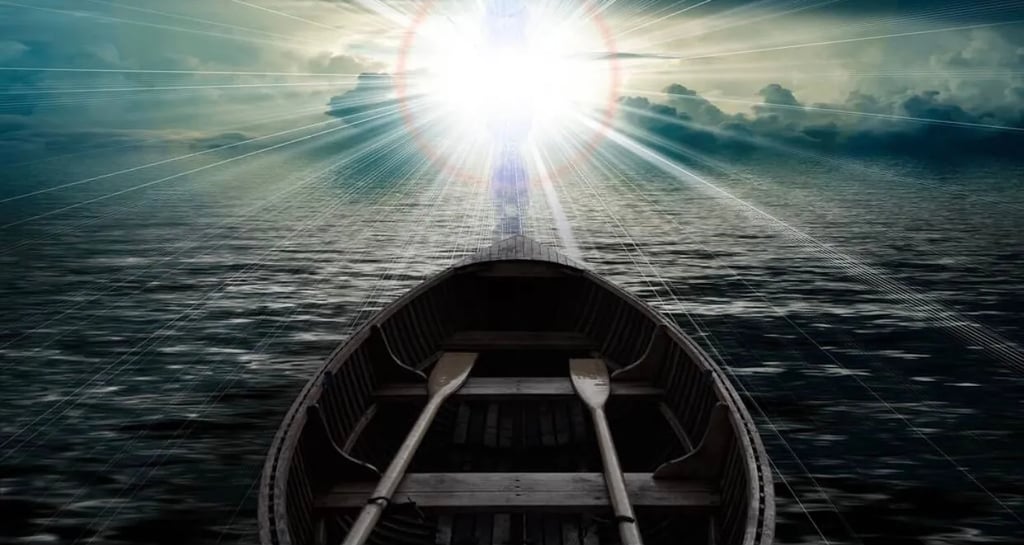
Today, we link unseen universal and mental realities with the dimensions of individual and collective human experiences. In the first two articles, I invited you to look at unseen forces and our own inner truth. Now, with this third part, I'll shift the attention to Phenomenality: those moments when we come across unusual experiences and the quiet ways that different phenomena influence what we believe, how we feel, and what we fear. Let's explore how the world shows itself to us, and how we make sense of what we may or may not see.
Phenomenality in our daily lives
Every day we encounter phenomenality. This elegant term means witnessing something or someone extraordinary, even marvelous. Phenomenality also addresses how beings and things relate to how we come across or what we notice about them. And it leads to our conclusions about these encounters and occurrences.
Phenomena are surprising and noteworthy but not necessarily explainable right away. And ideally, we should not interpret them through bias, entitlement, or ulterior motives. To phenomenologists, the ultimate source of all meaning and value is the lived experience of human beings. All philosophical systems, scientific theories, or aesthetic judgments are abstractions from the ebb and flow of the perceived and practically lived world.
Natural phenomena
Many phenomenal classes and categories exist. Phenomena appear in the universe, in nature, through the weather, and the lenses of astronomy, physics, biology, sociology, and chemistry, all wholly without any human influence.
Beliefs about natural forces
We learn from history how our ancestors likely started interpreting natural occurrences such as hurricanes, earthquakes, floods, and all kinds of then-unexplainable, often threatening but also fortunate happenings as moody or corrective acts by awe-inspiring deities. Let me name a few of these environmental deities:
Mesopotamia: Enlil (earth, air, wind), Manzaat (Rainbows), Shala (rain), and her husband Iškur/Adad (storms, floods)
Egypt: Seth (drought, desert winds), Horus (sunlit skies, friendly weather), Hapi (fertile Nile floods), and Nut (night skies, cosmic peace)
Greece: Zeus (weather, lightning, thunder, rain and wind), Poseidon (stormy seas, earthquakes, the tides), and Persephone (the seasons, flora, natural cycles)
Rome: Jupiter, Neptune, and Proserpina held the same responsibilities as their original Greek equivalent forerunners, see above
South Asia: Krishna (balanced natural order and dharma), Indra (clouds, storms, general weather), and Varuna (rules of nature, water, rainfall)
Persia: Dualistic Zoroastrian Ahura Mazda (sunshiny weather, favorable seasons, natural harmony) vs. Angra Mainyu (darkness, storms, unhealthy weather/natural disasters)
Scandinavia: Thor (thunderstorms, lightning), Loki (chaos, fires, disruptive catastrophes), and Freyr (fertility, plentiful climate, growth)
Abrahamic Faiths:
Judaism: HaShem (thunder, lightning, rain, drought)
Christianity: God (thunder, lightning, rain, drought, earthquakes)
Islam: Allah (celestial law, thunder, lightning, rain, drought)
And then some.
Natural phenomena aren’t just those dramatic moments of earthquakes, tsunamis, volcanic eruptions, thunder, and storms alone. They also bring us gifts such as rainbows, starry nights, the aurora borealis, and a beautiful sunrise.
Meaningful phenomenality
Let us look at a few more examples from the phenomenal chocolate box of invisible marvels:
Cosmic Spirituality: destiny (predesigned path of life), fate (inevitable outcome), karma (spiritual consequences of cause and effect), dharma (virtuous duty under cosmic law), luck (chance events), serendipity (fortunate coincidence), providence (wise forethought), universal order (cosmic balance)
Humanity: consciousness (awareness of the self), intuition (immediate knowing), free will (choice independent of any decree), empathy (ability to share in the feelings of others), love, belief (acceptance without proof), hope (expectation of good), moral consciousness (knowing right from wrong), hubris (misguided downfall-causing pride), civilization (human society development), culture (shared beliefs and practices), soulmates (being destined to be with 'the one')
Religion: miracles (divine interventions), epiphanies (faith-based revelations / supernatural encounters with i.e. angels), prophecies (divinely inspired predictions), beatific visions (seeing God or Jesus), theophany (divine manifestation)
Interpretations: anthropocentrism (human-centred worldview), theodicy (vindication of God's omnipotence v. the existence of evil), metaphysical causation (non-physical causes), cosmic justice (universal moral balance), divine providence (God's caring guidance)
Psychic Abilities: ESP (extrasensory perception), divination (ritualized pre-knowledge), premonition (feeling of future events), clairvoyance (seeing beyond the senses), mediumship (communication with the spirit worlds)
Energy: auras (energy fields around beings), chakras (spiritual energy centers), meridians (the body's energy pathways), prana (life force in Hinduism), kundalini (spiritual energy awakening), qi (vital energy in Chinese tradition)
Paranormality: ghosts (spirits of the dead), apparitions (spirit manifestations), out-of-body experiences (sensations of leaving one's body)
Mysticism: transcendence (rising beyond the ordinary), yin yang (balance of opposites), nirvana (liberation from suffering), the absolute (ultimate reality), satori (sudden enlightenment)
Time: déjà vu (feeling of prior experience), jamais vu (familiarity turning unfamiliar), loops (repeating circles of time), state of timelessness (loss of the perception of time), eternal return (concept of cyclical time), time dilation (altered state of time perception)
Culture: a movie (The Matrix, Parasite, Barbie), a book (The Da Vinci Code, the Harry Potter Series, The Secret), a song (Bohemian Rhapsody, Gangnam Style, Old Town Road) can be phenomena. The same goes even for a personality (Elvis Presley, Princess Diana, Greta Thunberg, Taylor Swift), a philosophy or worldview (Existentialism, New Age Spirituality, the revival of Stoicism), a political party (the 1980s surge of Germany's Green Party, the Tea Party, USA (2009-2012), the UK's Brexit Movement) even if their moment in time of garnering attention and activity is limited or just a fleeting flash in the pan.
Other phenomena reveal themselves within our psyche, our behaviors, general perceptions, beliefs, emotions, cultural storytelling, mysteries, and then some. Because we humans actually see the world through our phenomenal lenses. Always interpreting, always trying to find meaning in what's before us. And, less often, even creating meaning and purpose ourselves.
A personal note
Phenomenality is all about why and what makes something phenomenal. But it can also represent the concept of being sealed into a subjective world of phenomena and doctrinal human notions. Is everything we behold truly real, or are we just dealing with those proverbial deceptive appearances, courtesy of our own, mostly preconceived beliefs? And what would that say about that so often claimed infallibility and veracity of the dogmatic ideological and religious flavors dished out all around us? Dogma comes to us in the guises of childhood preconditioning, societal expectations, and the stories we are told to buy.
Growing up in Germany during the 1960s as a Türkenkind* wasn’t always fun but it also taught me something about certain aspects of human nature early on. Certain family members and societal actors tried to deploy their due diligence on me, to force me to believe and pray, to adopt their religions, to applaud their choices. Despite threats of divine and varied worldly consequences, I had only ever a hard no to give. This resident skeptic refused to play Simon Says. And no, it didn’t help with popularity, only with not caring too much about what others tell themselves to be true, I suppose. It's not that I recommend my nonconformist stance to everyone though, especially not in certain cultures and jurisdictions.
When you get told what to know, remember, think, and speak, you realize that your own feelings, experiences, or even plain facts don't matter. That there is no certainty. But then these good people didn’t know better. They were led by fear, the stressors of World War II, and their time’s lack of critical thinking. Too many circumstances. Too many scars suffered from their own stories. These years oddly inspired my initial thoughts about Destiny, contingency, and randomness; they cemented my ideal of independence, sharpening the affection for factuality. And the interest in phenomenal forces.
We don't necessarily learn from others, but through them.
How? By analyzing their triumphs, by avoiding their misgivings. I know I have, since early youth. Still do.
Dark aspects
History shows how Phenomenality can easily lead from perception to narrative and from there straight to absolute conviction and a final, ironclad religious concept. Or when the cosmic notion of Destiny gets twisted to self-declared exceptionalism and from there it’s not far to open hegemony and fascism? From make-believe to beyond belief? Objective reality? Free will?
So why does phenomenality matter? Understanding it can help you understand perception and consciousness. It’s at the heart of how we think about our experience of the world, what it means to be conscious, and what subjective experience really is.
Philosophical phenomenality
In philosophy, phenomenality usually means the way things show up to us in our minds, compared to how they might actually exist outside our grasp.
Philosophers throughout history, from ancient Greece to modern thinkers, have explored the gap between how things seem and what they really are, and how we come to perceive, know and believe anything through experience. When we think critically about information, when we realize that our knowledge depends on how we perceive things, we are much more likely to question what we consider “facts” or “truths.” We may even enjoy art and aesthetics more deeply. What we call the phenomenal world is what artists majorly draw from. Art and life imitating one another.
Awareness empowers
Understanding Phenomenality empowers us to see clearer and ask ourselves and our systems of reality so far uncomfortable, even challenging questions. That choice is ours. That liberty, too. Even a quiet and unseen rebellion requires courage. It is you who can softly remedy those arbitrary ways of cultural and generational indoctrination via tradition.
Phenomenal forces
We humans simply cannot do without these unseen, ancient, and yet timeless powers. They are our connectors to the cosmos, minus the burden of human entitlement. And yes, to me, our great organized religions are spiritual phenomena of a highly mystical nature, codified over time and cloaked in the mantle of dogma, predominantly reflecting handed-down narratives painted as facts.
Originally, Destiny is a non-religious concept. Its trailblazing phenomenal paradigm was, and let’s be nice here, "absorbed" by old and new faith systems (including our book denominations) to improve the design of their leading deities' mythology and amplify their divine abilities. It is called a brand core, and it is a long proven strategy to increase enduring attraction and respect. All courtesy and in the shade of the first and foremost cosmic force we call Destiny. And that's quite alright.
Approaching Destiny
And now we arrive at the crossroads of the unseen yet perceived: phenomenal forces. Destiny, fate, and luck beckon us to listen for what lies beyond the visible. These invisible powers are as remarkable as they are hard to explain. But since time began, they’ve sure caught our curiosity, inspired us, and a major part of humanity refuses to let them go, for thousands of years and counting.
What does that say about us though?
Phenomenal forces can involve entities, dynamic powers, or events from outside the laws of nature. However, we find their true definition in ourselves through the transcendent inner realms of experienced connection to the greater, invisible worlds beyond our material here and now. They appear, they sometimes even speak to us as cosmic guardians, divine voices, and metaphysical thoughts.
The mystical sphere always overlaps with philosophy and faith.
Understanding phenomenality gives us new ways to appreciate how we connect to everything and each other with our purest sensors, to discover what “really” shapes our perceptions. Such forces let us look beyond the solely material parapet of ordinary life, they make us keen to seek expansion and even that ever so precious higher purpose.
By Helena Lind┃Independent thinker and author of The Destiny Book : Rediscovering the Mother of Spirituality (History and Mystery of the All-Connecting Cosmic Thread), Identity Publications, 2024. My work draws on decades of comparative study across mythological, philosophical, and theological traditions, informed by lifelong personal experience and bilingual research into Destiny's cross-cultural presence.
* The German "Türkenkind" means "Turkish child."
The Destiny Book: Rediscovering the Mother of Spirituality (History and Mystery of the All-Connecting Cosmic Thread) by Helena Lind invites readers on a journey across Destiny's mythical beginnings to today’s enduring significance as a major guiding force. The Destiny Book offers an engaging history of humanity’s relationship with the wellspring of international spirituality.
©1994-2026 Helena Lind. All Rights Reserved.