
Gravity, Rainbows, and Destiny. Welcome to Phenomena
What is a phenomenon? Let's take a brief tour from ancient Greek skeptics to Kant to modern phenomenology, and the forces we sense but cannot fully explain.
DESTINOSOPHY
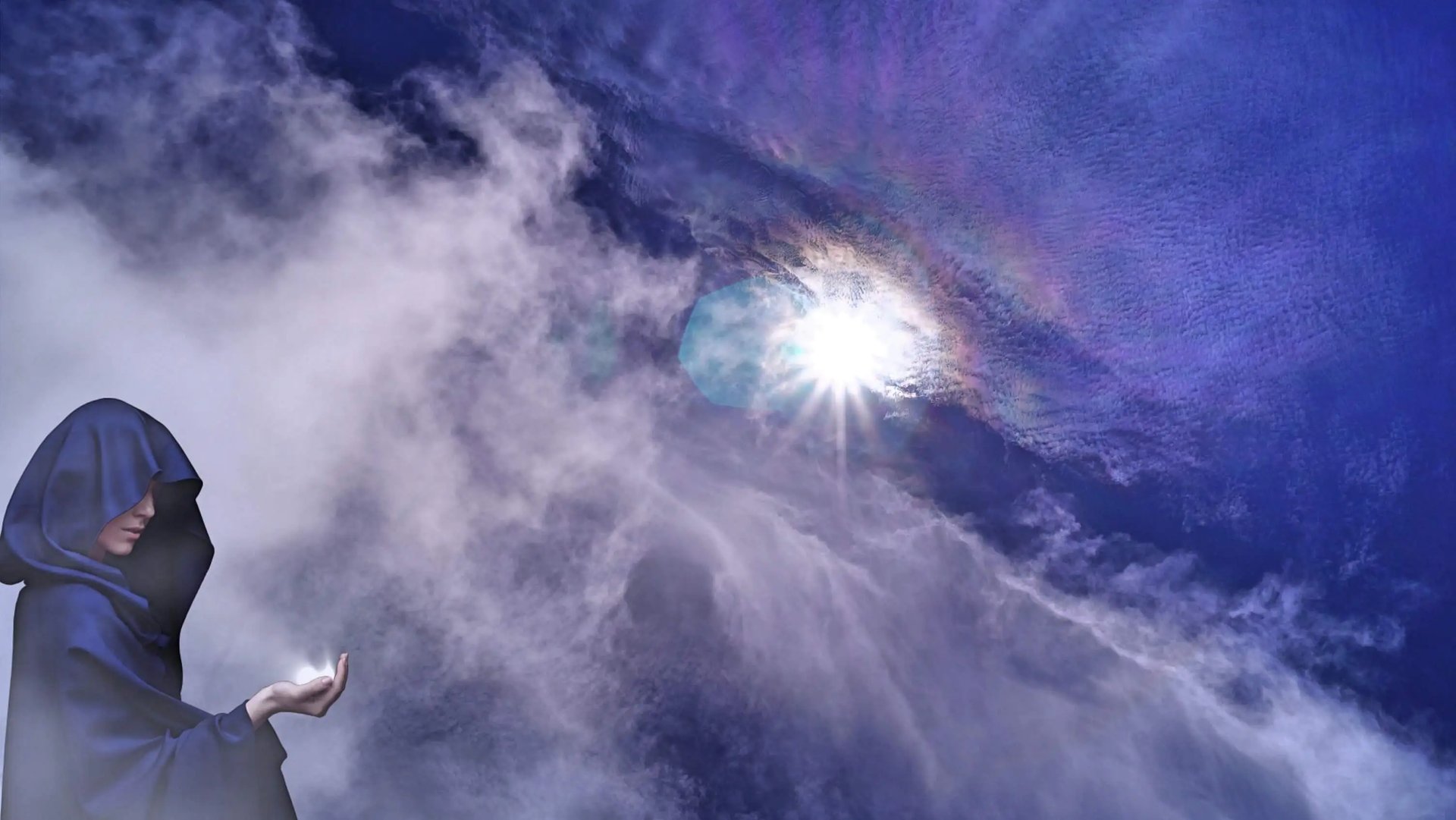
Have you ever wondered what it might be like to feel the nudge of a provident Destiny en route to your aspired goals? Or to be favored by a stroke of luck, even when the odds are stacked against you? Have you ever sleepwalked into a moment of serendipity, serving you quantum leaps on a silver platter?
Just three examples of intangible influencers Destiny, good fortune, and serendipity.
If you are looking to improve your navigation of life's boons and dooms, you'll find that there is plenty of insight, if not benefit, to be gained from knowledge about these fabled topics. In this article we're looking for heightened awareness of the invisible while keeping many of those probabilities and more or less intended consequences that are pushing and pulling the threads of our existence brightly on the radar.
I explore the spiritual aspects of phenomenal forces, especially those pertaining to human Destiny. My approach is holistic, tolerant, and respectful, and I'm not pandering to any agenda, movement, religion, or worldview.
To me, spiritual phenomena are inner truths, ideally untouched by dogma and, at best, independent of our physical senses. We acknowledge them through firsthand experience, subtle, yet deeply real. Resonating with a greater order that speaks not to belief, but to our inner certainty. We are not asked to adopt someone else's ideas or adventures, whether or not codified.
We perceive from within, guided by the authenticity of our own experience.
Our very Destiny.
So here's a brief overview of the history and philosophy of the general term phenomenon.
What is a phenomenon?
A phenomenon is a personally experienced, remarkable event, directly observed and witnessed. It can have a mysterious cause, like a portent. It can appear through nature, like a rainbow, or even be man-made, as in Artificial Intelligence, or it may manifest invisibly, like gravity and gravitation.
We know several "phenomenal" classes and categories, but that's for my next story, in which I will go into quite a bit more detail. Our term phenomenon developed from the Greek phainómenon for the appearance of something unusual that shows itself before us. Something that alights, as in phaínō/phainein for I show/to show. It refers to an outstanding occurrence. Something extraordinary. A wow! moment or encounter.
Who featured phenomena in their theories?
The Hellenic/Roman skeptic thinker Sextus Empiricus (late 200s to early 300s CE) originally addressed phenomena as appearances to our unique subjective senses, processed by our psychological states. Courtesy mirror neurons, echo chambers, ideals, aspirations, fears, you name it. In his undogmatic view, nobody knows anything for certain. So any judgment of the reality of a definitive truth compared to other suggestions would not have been his preferred position. He clearly was a "different strokes for different folks" man.
And today, many centuries and large technological and other leaps later, still nobody knows.
The German polymaths Gottfried Wilhelm Leibniz (1646-1716) and Immanuel Kant (1724-1804) later extended the metaphysical meaning of the phenomenon. Leibniz believed it to be an appearance of reality.
To Kant, who properly coined and put the term on the map, phenomena were versions of reality shaped by our human minds. According to him, a phenomenon is the opposite of its interconnected term noumenon, from the Greek nooúmenon, a derivative of the famous noûs, meaning intelligence or mind. Immanuel Kant classified a noumenon as something which can only be knowable through purely intellectual intuition, a standalone factual reality, whereas a phenomenon is a subjectively perceived affair.
Have you ever heard of Phenomenology?
It is the philosophical exploration and thought school of how things appear unfiltered by analysis, science, or biased interpretation through our more or less conscious, subjective experience. It does not ask for causality or definition. It’s how we note our surroundings, process meanings, and feel about our memories.
Edmund Husserl (1859-1938), the Austrian-German mathematician, philosopher, and godfather of Phenomenology saw phenomena as firsthand knowledge because of their appearance in our awareness. The Nazis "cancelled" him, to no avail though, as his achievements, including his influence on Existentialism, proved impossible to be marginalized.
Maurice Merleau-Ponty (1908-1961), the French existentialist, described phenomena as meaningful results of our interconnected experience of body, perception, and world.
Martin Heidegger (1889-1976), a student of Husserl and a controversial German existential philosopher, included unique angles on the paths of Destiny and fate in his views and work on Phenomenology. He saw phenomena as a lived approach to reveal our very "being-there" while decoding the framework of existence, or "being-in-the-world."
A note for completeness
We better not confuse the school of Phenomenology with the similarly-sounding Phenomenalism. The latter developed from the work of British thinkers. These were George Berkeley (1685-1753), who claimed that to be is to be perceived, and David Hume (1711-1776), who argued we only have ideas and impressions but cannot know “things-in-themselves". Both reduced knowledge to experience. Modern European scientists and philosophers like Ernst Mach (1838–1916), Bertrand Russell (1872–1970 ), and Alfred J. Ayer (1910–1989) formalized a science-based Phenomenalism. They rejected Metaphysics, believing physical objects to be constructions of logical sensory experiences.
And then there is yet another branch called Epiphenomenalism, credited to the British biologist-philosopher Thomas Henry Huxley (1825-1895). It claims that a brain's physical workings generate mental events without any effective power or meaning. Reminiscent of that battlefield of minds called free will vs. determinism debate. To be revisited.
Why should we be interested in phenomenal forces?
Because there's likely never been a better, or rather a worse time to rediscover an essence that could help us evaporate the mundane mist we're more and more exposed to. Anything can and will occur, and nothing ever stays the same. Take this from someone whose journey is living testament to dealing with human Destiny, fate, the many hands of luck, and serendipity.
Just another reason I wrote my book about Destiny & Co. *
Into the Unseen
From the rise of ancient skepticism to the Enlightenment, from Phenomenology to modern metaphysics, phenomenal experiences remain both fascinating and debated. But how do they appear in our lives today, beyond the senses?
How do these invisible forces shape the way we perceive, decide, and become?
That's where we're heading next.
By Helena Lind┃Independent thinker and author of The Destiny Book : Rediscovering the Mother of Spirituality (History and Mystery of the All-Connecting Cosmic Thread), Identity Publications, 2024. My work draws on decades of comparative study across mythological, philosophical, and theological traditions, informed by lifelong personal experience and bilingual research into Destiny's cross-cultural presence.
*The Destiny Book: Rediscovering the Mother of Spirituality (History and Mystery of the All-Connecting Cosmic Thread) by Helena Lind invites readers on a journey across Destiny's mythical beginnings to today’s enduring significance as a major guiding force. The Destiny Book offers an engaging history of humanity’s relationship with the wellspring of international spirituality.
©1994-2026 Helena Lind. All Rights Reserved.